AI-Driven Smart Grid Platform
Executive Summary Tech4Biz designed and engineered an end-to-end Advanced Metering Infrastructure platform: smart meters and multi-protocol communication, edge data concentrators, a head-end system, a Meter Data Manageme
| Showcase record | |
|---|---|
| Showcase category | Partner whitepapers and briefs, Case studies |
| Industry | Energy, Utilities & Smart Grid |
| Published | 20 July 2026 |
Key results
Lower operational and maintenance costs through condition-based maintenance. Improved customer reliability and service quality (SAIDI/SAIFI).

Executive Summary
Tech4Biz designed and engineered an end-to-end Advanced Metering Infrastructure platform: smart meters and multi-protocol communication, edge data concentrators, a head-end system, a Meter Data Management System with automated validation-estimation-editing, AI analytics for forecasting and theft detection, and web/mobile customer engagement, integrated with the utility’s CIS, billing, ERP, GIS, and SCADA/OMS/DMS.
This document details the problem, the engineered solution, the reference hardware (smart meter and data concentrator), representative operator and customer screens, and the measurable business outcomes
Problem Statement
- Reactive maintenance : transformer and switchgear failures detected only after outages, driving unplanned downtime and emergency repair costs.
- Limited real-time visibility : fragmented SCADA data, no unified operational picture across substations, feeders, and DER.
- Slow fault detection and restoration : manual localization extended outage duration and SAIDI/SAIFI reliability indices.
- Renewable integration strain : variable solar/wind and distributed resources destabilized voltage and frequency without predictive balancing.
- OT security exposure : legacy protocols (IEC 61850, Modbus, DNP3) ran with weak segmentation and no intrusion detection.
- Rising technical losses and poor asset utilization : no data-driven basis for load optimization or lifecycle planning
Suggested Solution
Tech4Biz built a custom platform rather than deploying an off-the-shelf product, combining AI, IoT, digital twins, edge computing, cloud, GIS, and advanced analytics. The system is structured in four layers:
Field / OT Layer
- Substation relays/IEDs, smart meters (AMI), transformer and cable sensors, solar/wind/BESS/DER, SCADA and switchgear connected through standard grid protocols.
Edge Layer — T4B-SGEG Gateway
- Protocol translation, local AI inference for anomaly detection, store-and-forward buffering for network resilience, and a Zero Trust security broker at the OT boundary.
Cloud / Core Platform
- Streaming ingestion and time-series lake, digital twin engine, AI/ML services (demand forecast, load balancing, RUL), GIS asset registry, control orchestration, and cybersecurity/compliance services.
Applications & Experience
- Grid control room dashboard, predictive asset health, digital twin viewer, customer energy portal, and a mobile field app.
Reference Edge Hardware Design
The edge layer runs on a reference gateway design engineered by Tech4Biz the T4B-SGEG-R1. It is a DIN-rail industrial gateway architecture intended for substation and feeder deployment, targeting a -40°C to +70°C rating. It is presented here as an engineered reference design that guides deployment on ruggedized industrial hardware.
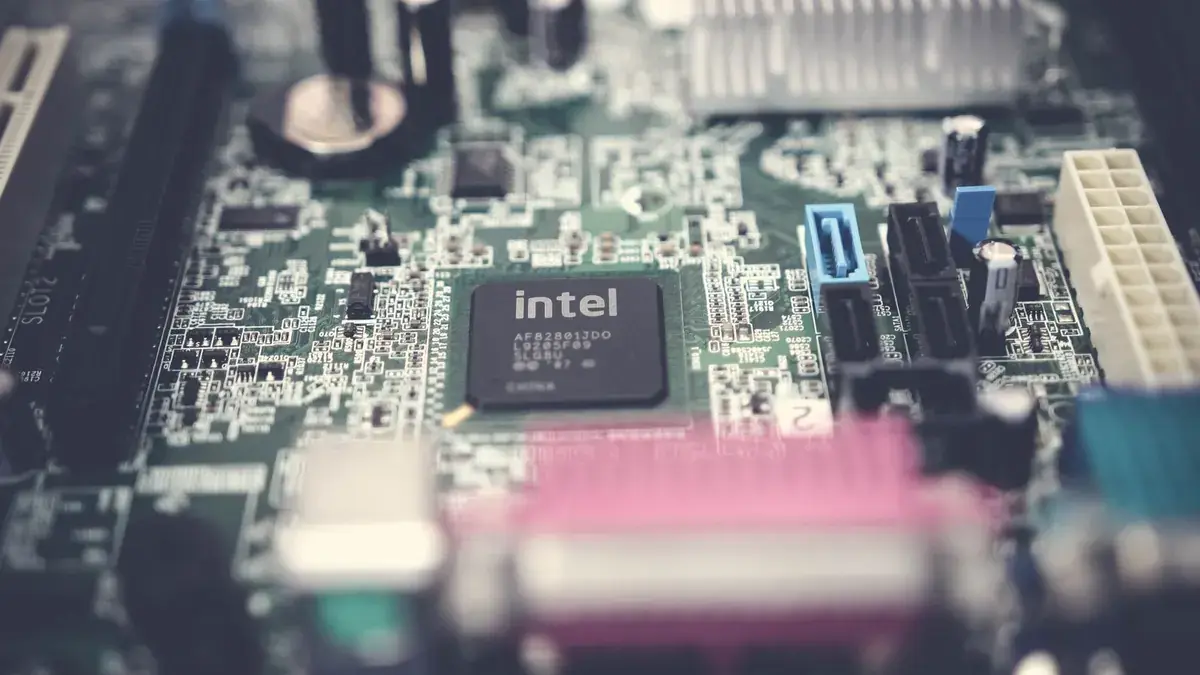
Design blocks and rationale:
- Compute SoC — quad-core ARM with on-die NPU for local AI inference; TrustZone, secure boot. Runs the containerized edge stack so anomaly detection continues even when the uplink drops.
- Protection Relay Interface — IEC 61850 GOOSE/MMS plus 16 isolated digital inputs to interface directly with substation protection schemes.
- SCADA / Serial — Modbus RTU/TCP and DNP3 over 4× RS-485 and 2× RS-232 for brownfield equipment.
- Analog Front End — PT/CT voltage and current sensing with 24-bit ADC, plus temperature and vibration channels for asset health telemetry.
- Power & Isolation — wide-input 12–48V DC with surge/EMI protection and hardware watchdog for substation electrical environments.
- Connectivity — dual GbE, 4G/5G, LoRa, optional Wi-Fi 6/BLE for redundant backhaul.
- Security Module — TPM 2.0 / secure element with hardware crypto and key storage, anchoring the Zero Trust model at the edge.
- Time Sync — PTP IEEE 1588 and GPS with RTC holdover for accurate event time-stamping across the grid.
- Edge Store / Buffer — microSD store-and-forward for offline resilience and gap-free data on reconnect.
Operator Applications
Grid Control Room Dashboard
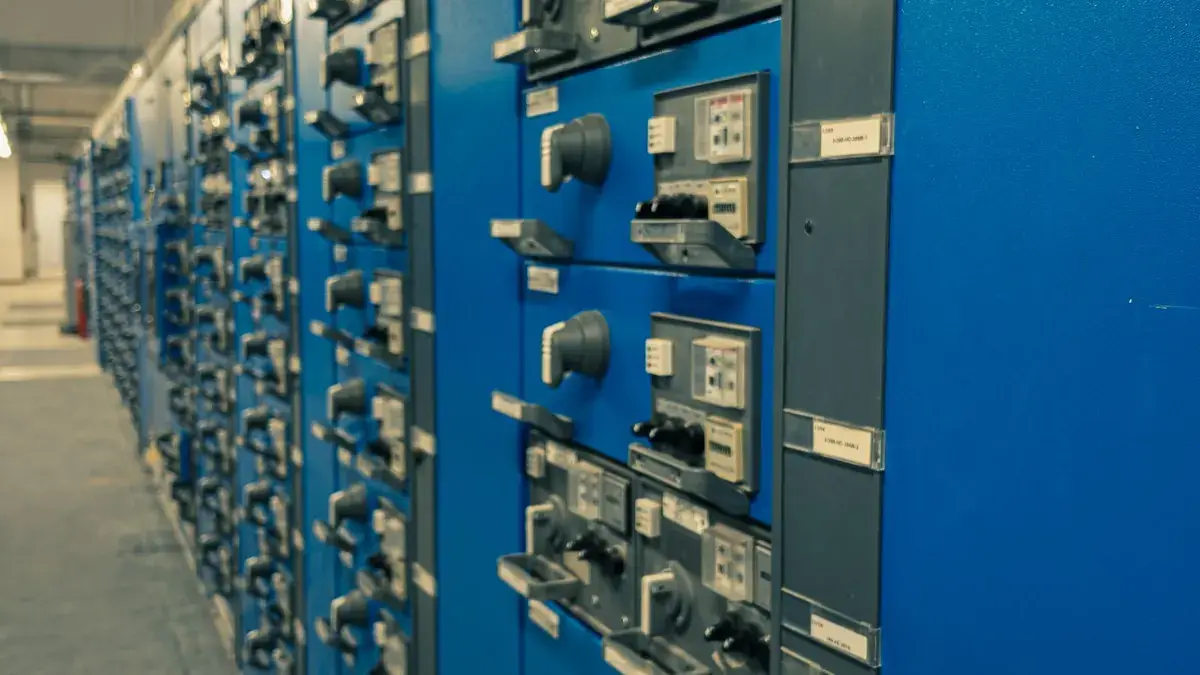
Unified real-time view of system load, frequency, renewable mix, and active alarms, with live power-flow trending, network topology health, and a prioritized event feed showing predictive and auto-corrected actions.
Predictive Asset Health
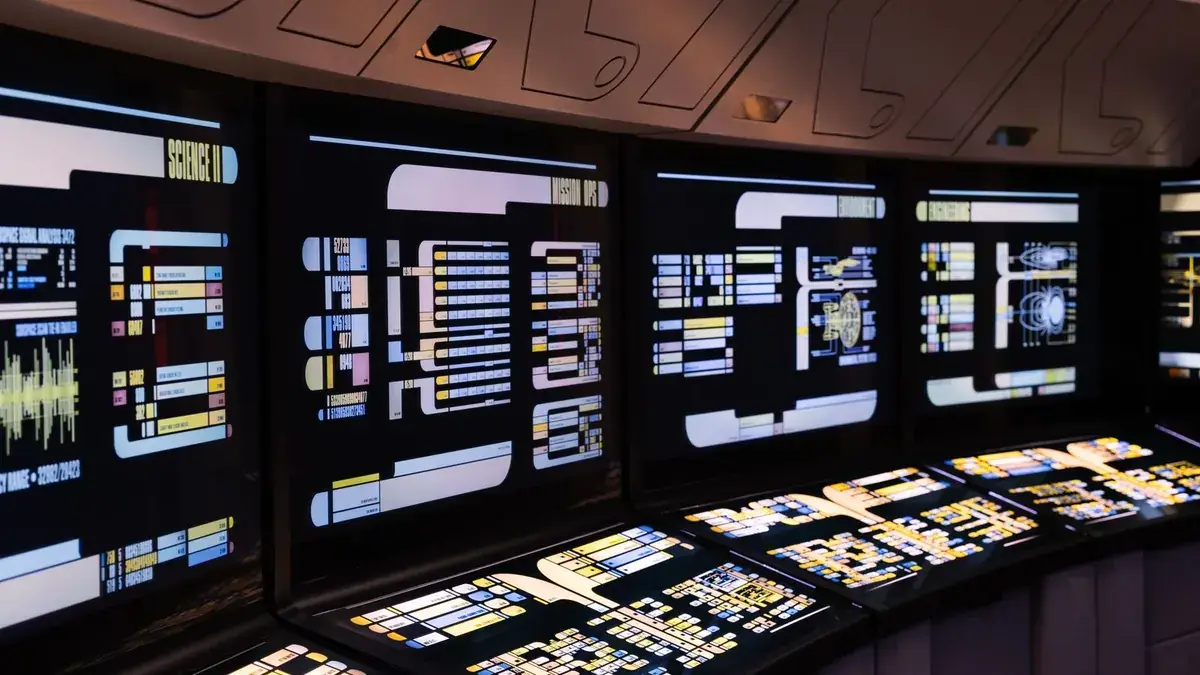
Per-asset health index, live sensor telemetry, AI degradation forecast against a failure threshold, remaining-useful-life estimate, and ranked recommended actions with quantified avoided-outage cost.
Business Outcomes
Representative outcome targets delivered by the platform:
| Metric | Before | After |
|---|---|---|
| Unplanned outages | Reactive, frequent | Down via prediction |
| Fault detection / restoration | Manual, minutes+ | Sub-second isolation |
| Asset lifespan / utilization | No lifecycle data | RUL-driven planning |
| Technical losses | Unoptimized | Reduced via balancing |
| Renewable integration | Destabilizing | Forecast-balanced |
| OT security posture | Weak segmentation | Zero Trust + IDS |
| Operational visibility | Fragmented | Real-time, unified |
Additonal benefits
- Lower operational and maintenance costs through condition-based maintenance.
- Improved customer reliability and service quality (SAIDI/SAIFI).
- Support for regulatory compliance and ESG/decarbonization initiatives.
- Faster, data-driven capacity and scenario planning via the digital twin.
Tech4Biz Differentiator
Tech4Biz is an R&D engineering company. We design and engineer custom Smart Grid platforms by combining AI, IoT, digital twins, edge computing, cloud platforms, GIS, and advanced analytics — helping utilities modernize electrical infrastructure, improve operational efficiency, and accelerate the transition toward intelligent, sustainable energy systems.
Source
- Tech4Biz Showcase, collected on 26 November 2026.