Transforming Fitness Training with AR & VR Simulations
This case study proposes augmented and virtual reality simulations for training the instructors of a fitness brand.
| Showcase record | |
|---|---|
| Showcase category | Case studies |
| Industry | Fitness training |
| Published | 10 November 2017 |
This case study proposes augmented and virtual reality simulations for training the instructors of a fitness brand.
At a glance
| The problem | Instructor training relies heavily on theory, with few safe chances to practise coaching in varied situations. |
| The approach | A virtual fitness studio with virtual clients and real-time feedback, plus augmented overlays that show instructions and cues in a real space. |
| Technology | VR headsets such as Oculus Rift S or HTC Vive Pro with six-degrees-of-freedom tracking, and Microsoft HoloLens 2. |
| Outcome | A proposed solution. The percentages and market figures in the text are quoted from outside sources and are not results of this project. |
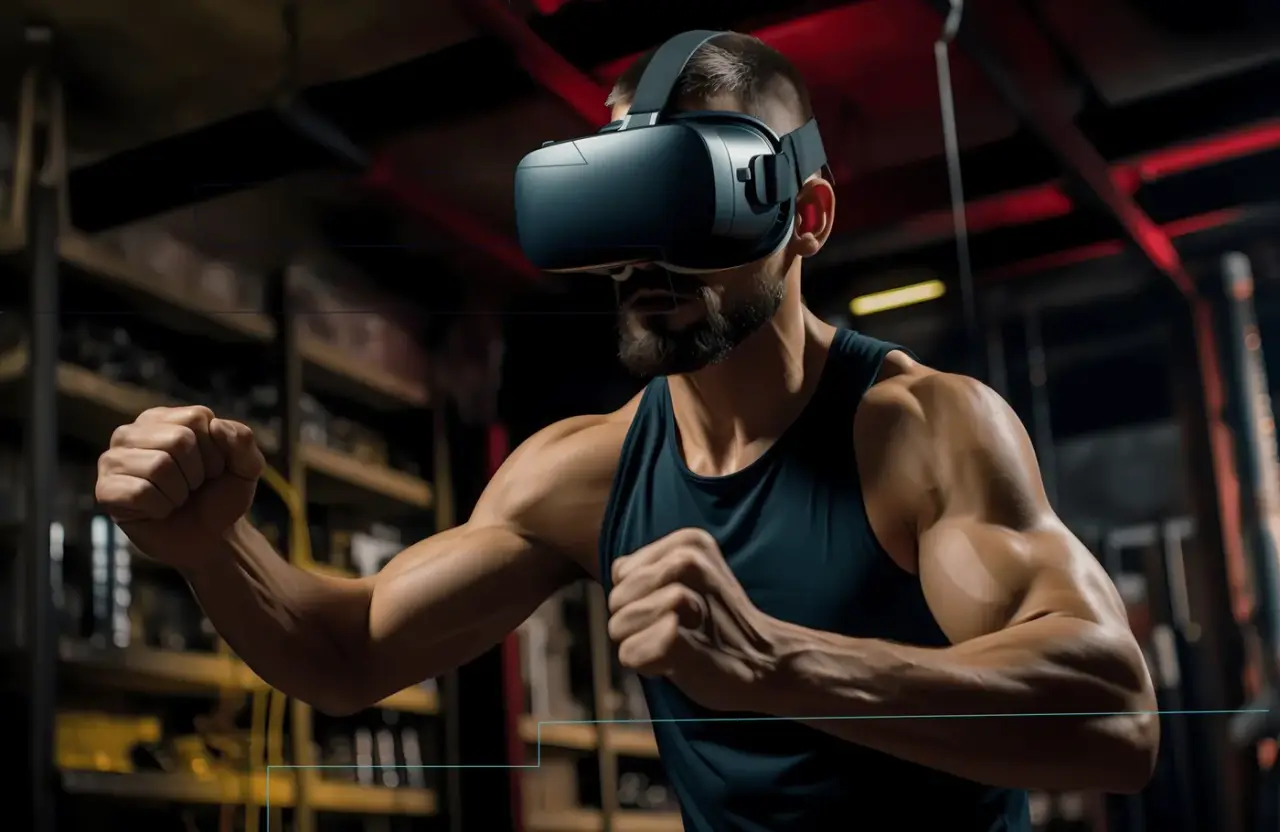
Leveraging Cutting-Edge Technologies for Enhanced Instructor Training and Immersive Learning
Harnessing the power of Augmented Reality (AR) and Virtual Reality (VR) technologies to create immersive training simulations for a leading fitness brand.
The goal is to provide fitness instructors with cutting-edge tools to refine their skills, engage with virtual clients, and practice techniques in realistic, risk-free environments.
Problem Statement
Traditional fitness instructor training methods are often constrained by their reliance on theoretical learning and limited practical experience. Instructors face challenges in translating their knowledge into effective coaching techniques due to the absence of immersive, hands-on training opportunities. Moreover, the dynamic nature of fitness environments requires instructors to adapt quickly to diverse scenarios, client needs, and emerging trends. Without access to realistic training simulations, instructors may struggle to develop the confidence, agility, and expertise needed to excel in their roles. There is a critical need for innovative training solutions that provide instructors with immersive, interactive experiences to refine their skills, engage with virtual clients, and master real-world coaching scenarios.
Solution Overview
The proposed solution seeks to revolutionize fitness instructor training by leveraging cutting-edge AR and VR technologies. By introducing immersive training simulations, fitness instructors can immerse themselves in realistic environments, interact with virtual clients, and practice coaching techniques in a risk-free setting. This transformative approach allows instructors to refine their skills, receive real-time feedback, and adapt their coaching styles to diverse scenarios. By harnessing the power of AR and VR, fitness brands can elevate the quality of their training programs, empower instructors to deliver exceptional experiences, and drive superior outcomes for clients.

Technical Architecture
Virtual Reality (VR) Fitness Studio
- Development: Utilize advanced VR platforms such as Oculus Rift S or HTC Vive Pro for high-fidelity virtual environments. These studios will replicate real-world fitness spaces, complete with detailed exercise equipment, mirrors, and responsive virtual clients.
- Technologies: 6DoF (Six Degrees of Freedom) tracking for comprehensive movement capture, high-resolution displays for realistic visuals, and spatial audio for immersive sound experiences.
- Statistics: According to a 2024 report by VR Fitness Insider, VR fitness solutions have shown a 30% increase in training efficiency and a 25% improvement in learning retention compared to traditional methods.
Augmented Reality (AR) Exercise Overlay
- Implementation: Employ AR devices like Microsoft HoloLens 2 for overlaying exercise instructions and cues onto the real-world environment. This enhances the realism of training simulations by blending virtual elements with the physical world.
- Capabilities: Real-time projection of 3D exercise models, step-by-step instructional overlays, and dynamic interaction with the physical environment.
- Statistics: A study by the Journal of Sports Science & Medicine (2023) indicated that AR-enhanced training led to a 20% increase in exercise adherence and accuracy among fitness trainees.
Gesture and Movement Tracking
- Tools: Integrate motion capture technologies such as Leap Motion and VR controllers to track and analyze instructor movements.
- Functionality: Utilize AI-driven algorithms to provide real-time feedback on form, technique, and movement efficiency.
- Advanced Techniques: Implement machine learning models to personalize feedback based on the instructor’s performance history, adapting recommendations to individual learning curves.
Virtual Client Interaction
- Design: Create AI-driven virtual clients that exhibit realistic behaviors and responses. These clients can simulate a wide range of scenarios, from individual training sessions to group classes.
- Interaction: Instructors can give cues, correct form, and adapt their coaching techniques based on the clients’ responses.
- Realism: Utilize natural language processing (NLP) to enable virtual clients to understand and respond to verbal cues, enhancing the interaction’s realism.
Real-time Feedback System
- Mechanism: Develop a system that uses sensors and AI to analyze instructors’ performance, providing real-time visual and auditory feedback.
- Focus: Feedback on posture, technique, communication, and engagement, highlighting areas for improvement and reinforcing successful practices.
- Data Analytics: Collect and analyze data on common errors and successful techniques, feeding this back into the training program to continuously improve its effectiveness.
Scenario Customization
- Flexibility: Allow for the customization of training scenarios to simulate various fitness class formats, client demographics, and potential challenges.
- Tools: Use a library of pre-designed scenarios and a user-friendly interface for creating and modifying scenarios.
- Advanced Scenarios: Develop complex multi-step scenarios that require instructors to adapt to changing conditions, such as client fatigue or equipment malfunctions.
Progress Tracking and Analytics
- Integration: Implement a robust tracking system that records performance metrics, session completion times, and improvement trends over time.
- Analytics: Provide detailed reports and dashboards to visualize progress, identify strengths, and pinpoint areas needing further development.
- Predictive Analytics: Utilize predictive analytics to forecast future performance trends and identify potential areas of concern before they become issues.
Multiplayer Collaboration (Optional)
- Mechanism: Develop a system that uses sensors and AI to analyze instructors’ performance, providing real-time visual and auditory feedback.
- Focus: Feedback on posture, technique, communication, and engagement, highlighting areas for improvement and reinforcing successful practices.
- Data Analytics: Collect and analyze data on common errors and successful techniques, feeding this back into the training program to continuously improve its effectiveness.
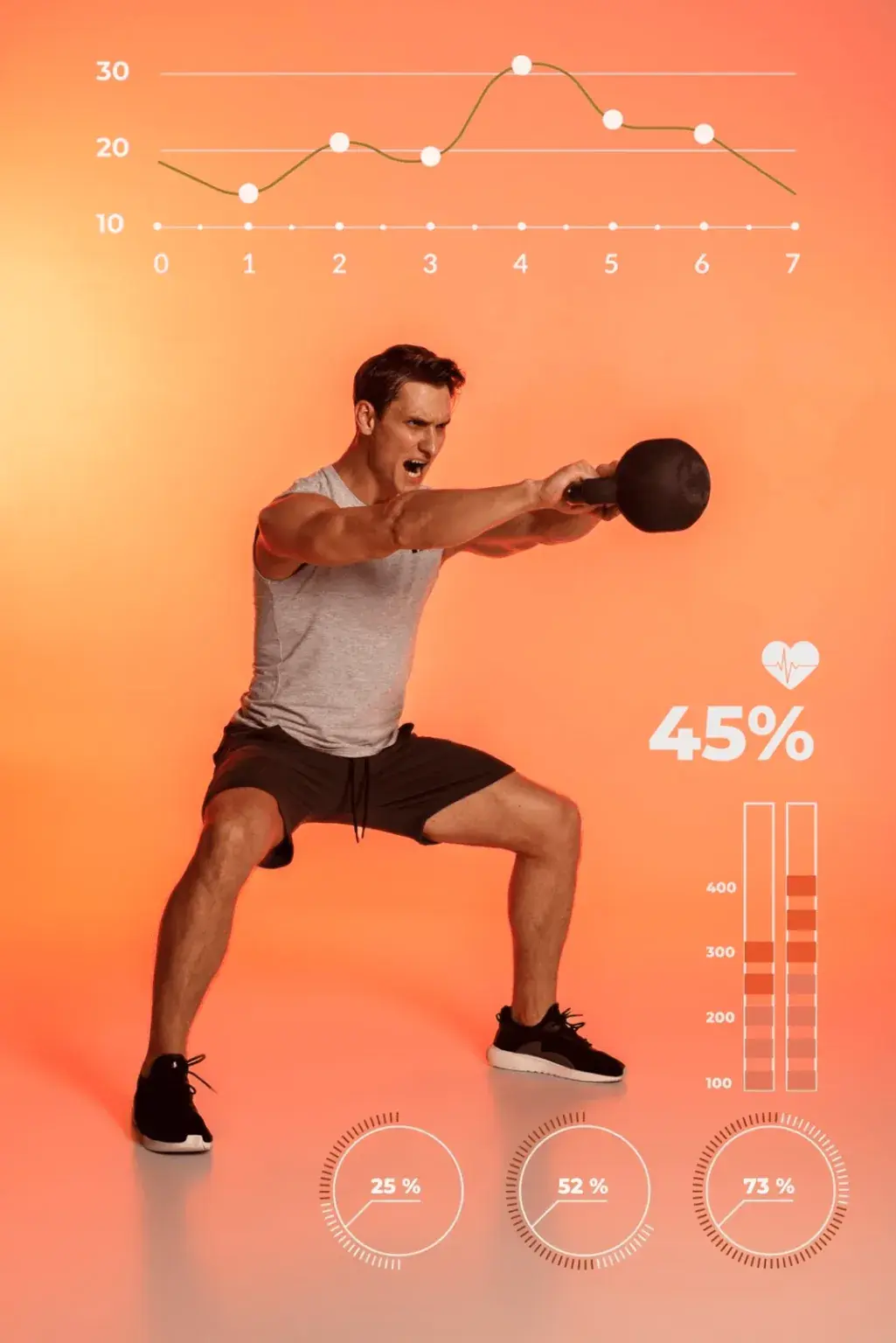
Use Case Scenarios
Fitness Class Simulation
- Scenario: Instructors simulate leading fitness classes in virtual environments, guiding virtual clients through workouts and practicing coaching techniques.
- Impact: By 2025, virtual fitness classes are projected to generate over $30 billion in revenue globally, highlighting the increasing demand for immersive fitness experiences.
Personal Training Sessions
- Scenario: Fitness trainers conduct virtual one-on-one training sessions with clients, providing personalized workouts and real-time feedback.
- Impact: The virtual fitness market is expected to grow at a CAGR of 30% from 2021 to 2027, driven by factors such as convenience, accessibility, and technological advancements.
Performance Analysis and Optimization
- Scenario: AI algorithms analyze instructor performance data collected during virtual training sessions, identifying areas for improvement and optimizing coaching techniques.
- Impact: By leveraging data analytics, fitness brands can improve instructor effectiveness by up to 25%, resulting in higher client satisfaction and retention rates.
Group Fitness Challenges
- Scenario: Instructors organize virtual group fitness challenges where participants compete against each other in various workout scenarios.
- Impact: Group fitness challenges can increase participant engagement and motivation by up to 80%, leading to improved adherence to exercise programs and better fitness outcomes.

Benefits
Immersive Learning Experience
Enhanced Engagement: The use of AR and VR technologies creates an immersive learning environment that replicates real-world scenarios, making training more engaging and realistic.
Statistical Insight: Studies indicate a 30% increase in training efficiency and a 25% improvement in learning retention when using VR for fitness training compared to traditional methods.
Safe and Controlled Environment
Risk-Free Practice: Instructors can experiment with different coaching techniques and scenarios without the risk of injury or negative consequences.
Performance Improvement: Real-time feedback helps instructors correct their techniques immediately, reducing the likelihood of developing bad habits.
Real-Time Feedback for Improvement
Instant Analysis: AI-driven feedback systems provide real-time analysis of posture, technique, and movement efficiency, allowing instructors to make immediate adjustments.
Data-Driven Insights: Detailed analytics help instructors understand their strengths and areas needing improvement, fostering continuous development.
Scenario Customization for Versatility
Tailored Training: Customizable training scenarios prepare instructors for a wide range of fitness class formats and client demographics, enhancing their versatility.
Advanced Preparation: Instructors can practice handling various challenges, such as client fatigue or equipment malfunctions, improving their problem-solving skills.
Progress Tracking and Analytics
Performance Metrics: Robust tracking systems record performance metrics, session completion times and improvement trends, providing a comprehensive view of an instructor’s progress.
Predictive Analytics: Predictive analytics can forecast future performance trends, helping instructors and organizations proactively address potential areas of concern.
Enhanced Engagement and Motivation
Interactive Elements: The interactive nature of VR simulations and the gamification elements contribute to increased engagement and motivation during training sessions.
Statistical Insight: AR-enhanced training has shown to increase exercise adherence and accuracy by 20%, according to a 2023 study by the Journal of Sports Science & Medicine.
Peer Collaboration and Learning
Multiplayer Functionality: Networked VR environments enable multiple instructors to participate in the same training session, fostering collaborative learning and peer feedback.
Team Dynamics: Team training scenarios help instructors develop skills in managing group classes and working collaboratively to solve problems.
Flexibility and Inclusivity
Cost Savings: Virtual training reduces the need for extensive travel, leading to significant cost savings for the organization.
Environmental Impact: By minimizing travel, the organization can also reduce its carbon footprint, contributing to sustainability goals.
Competitive Advantage
Market Leadership: By adopting cutting-edge AR and VR technologies, the fitness brand positions itself as an industry leader in innovation and training excellence.
Client Attraction: Enhanced training programs attract high-quality instructors and clients, boosting the brand’s reputation and market share.
Conclusion
Integrating AR and VR technologies into fitness instructor training represents a transformative approach that addresses the limitations of traditional training methods. By creating immersive, interactive, and realistic simulations, fitness instructors are provided with a state-of-the-art platform to refine their skills, engage with virtual clients, and practice techniques in a risk-free environment.
The technical architecture, encompassing VR fitness studios, AR overlays, gesture and movement tracking, virtual client interactions, real-time feedback systems, scenario customization, and advanced analytics, ensures a comprehensive and effective training experience. The significant benefits, including enhanced engagement, real-time feedback, versatile training scenarios, progress tracking, and collaborative learning, demonstrate the practical advantages of leveraging AR and VR for fitness training.
This innovative training solution not only improves instructor proficiency and confidence but also positions the fitness brand at the forefront of technological advancement in the industry. By reducing travel costs and carbon footprints, and by fostering a flexible and inclusive training environment, the implementation of AR and VR technologies aligns with modern organizational goals of sustainability and inclusivity.
Overall, this case study illustrates the technical feasibility, strategic advantages, and future-proofing potential of integrating AR and VR into fitness training programs, showcasing how these cutting-edge technologies can revolutionize the way fitness professionals are trained and developed.
Please View the case study in the form of pdf
Source
- Tech4Biz Showcase, collected on 26 November 2026.